Tuesday, November 10, 2009

826 Seattle hosts Adderall Diaries' author, Stephen Elliott Dec. 2 (7-9 pm)

Stephen Elliott Memoir Writing Workshop Dec 2, 7-9 p.m.

826 Seattle is pleased to announce that longtime McSweeney’s author Stephen Elliott will be here at 826 on Wednesday December 2 from 7-9 p.m. to talk about the generation of memoir, using the author’s recent book, The Adderall Diaries, as a jumping off point for discussing the process of figuring out your story and editing it into something someone would want to read.
  • You’ll get ideas on writing memoir
  • Understand some of the problems the memoir writer may encounter
  • How to deal with family members and friends who may not want to be written about
  • Writing tips for accessing memories and experiences
The Adderall Diaries is Stephen Elliott’s first memoir but his seventh book, all of them written from personal experience. Even better: admission is the price of the book, and includes a copy! That’s $25 for your own copy of The Adderall Diaries and a chance to learn from Mr. Elliott himself at this one-of-a-kind workshop. Purchase your ticket today at Brown Paper Tickets.

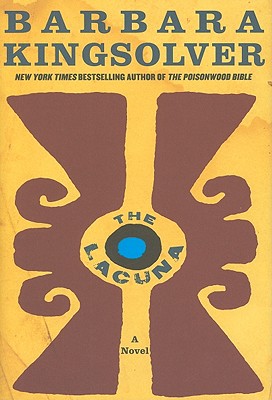
Barbara Kingsolver, Nov 20 (1:00-2:30 pm) at 3rd Place Books

I'm a HUGE fan of Barbara Kingsolver, so you can imagine my excitement when I learned she'll be here in Seattle this month.

She's promoting her new book, Lacuna, which is described as "a page-turner spanning three decades in Washington DC, Mexico, and Russia. An unassuming narrator illuminates the
struggle over communism and global power as he falls into the lives of Frida Kahlo, Lev Trotsky, Herbert Hoover, Richard Nixon, and more"

Friday, October 23, 2009

John Irving at Lake Forest Park Third Place Books, Nov. 3

Seattle Times Books Editor Mary Ann Gwinn interviews John Irving on the Third Place stage, part of Irving's book tour for Last Night in Twisted River. November 3, 7:30 pm-8:30 pm. Lake Forest Park, Third Place Books, 17171 Bothell Way NE, Lake Forest Park, WA 98155

A sad, sad day

Woe is me and all book lovers who have associated Pioneer Square with the Elliott Bay Bookstore. This week The Seattle Times published news that the iconic bookstore is saddled with debt and facing hard decisions. Read the full story here: http://seattletimes.nwsource.com/html/localnews/2010090597_elliottbay19m.html

Thursday, October 08, 2009

Future author "sightings" in Seattle

Michael Chabon looks like he'll put in an appearance: http://www.elliottbaybook.com/events/oct09/chabon.jsp
Friday, October 16 at 5 p.m. at Elliott Bay

And this looks like an excellent program at Third Place Books, Lake Forest Park, on Oct 21: Celebrate National Reading Group Month at Third Place Commons Stage, Lake Forest Park
October 21, 2009 - 7:00 - 9:00pm

Hear 5 experienced authors give their perspectives on author/book club meetings. Come with questions – and enjoy refreshments, book club tips and lists, and literary stuff!
Authors will sign their books, too.

Nancy Pearl - Moderator
Jamie Ford – Hotel on the Corner of Bitter and Sweet
Diane Hammond – Hannah’s Dream
Stephanie Kallos – Sing Them Home
Jim Lynch – Border Songs
Garth Stein – The Art of Racing in the Rain


John Irving anyone?
He'll be at Third Place Books, Lake Forest Park, November 3, 2009 - 7:30 - 8:30pm
His new book is Last Night in Twisted River

Thursday, September 24, 2009

Proulx coming to Seattle in October!

Annie Proulx - October 7, 2009, 7:30 pm
Benaroya Hall, downtown Seattle at 200 University Street.
The Pulitzer Prize/National Book Award-winning author of "The Shipping News" and "Brokeback Mountain," the story that inspired the movie of the same name. Seattle Arts and Lectures: http://www.lectures.org/index.php

September Nights 'o Reading

Just finished Julia Child's My Life in France. Boy is that lady a good storyteller, albeit her grand-nephew takes much credit for putting together the book. I envy her memory, and now I don't feel so bad about keeping so many old letters and photos. They jog the memory cells that have gone to sleep.

Read through the prologue of Water for Elephants before my eyelids couldn't stay open longer last night. Went to Bharti Kirchner's 826 Workshop on Writing the First Page of a Novel, and based on what Kirchner said and other books I've read, Sara Gruen would get an A+.

Speaking of 826 How to Write Like I Do workshops, I learned loads from the queen of books, Ms. Nancy Pearl, this past month on writing book reviews. Check out the soon-to-be-released schedule of workshops for 2010: http://www.826seattle.org/writelikeido/bios.html

Friday, August 14, 2009

What I'm reading

Why read just one . . .

John le Carré's The Constant Gardener (got to read it before I see the movie!)

Barack Obama's The Audacity of Hope--excellent!

Traveller's Tales' A Woman's Path

Robert Ray's The Weekend Novelist

Molly Gloss's The Hearts of Horses--so, so

And just found this site: http://www.bookbrowse.com/top_reviews/

Thursday, July 23, 2009

An Artist of the Floating World (Kazuo Ishiguro)

Kazuo Ishiguro, who also wrote “The Remains of the Day,” is a highly lauded Japanese author, born in Japan, then moved to England at the age of six. The novel follows Masuji Ono, a much accomplished artist from October 1948 to June 1950. The background is a Japan recovering and rebuilding after World War II. Ono-san had joined the patriotic fervor leading up to the war. Confrontations with Mr. Kuroda, his former pupil, along with suggestions from his daughter Setsuko’s hint at past transgressions as does Ono-san believing his role in the war may hinder his daughter Noriko’s miai, or marriage arrangement. The new generation—Suichi, Setsuko’s husband, and Taro, his new son-in-law—regard the newly embraced democracy as tantamount to a happy future, even if, as Ono-san sees it, Japan remains in the shadow of America. He is old, retired, belittled by his two daughters, and so he passes his time reinterpreting conversations he’s had and sharing scenes of his past. Ono-san’s thoughts often glide in and out of these scenes even as his present life carries on, glimpses of past glories haunt the present in the same way Mrs. Kawakami’s traditional bar is soon overshadowed by multi-story offices. Unfortunately for this reader, the pacing of the novel is slow, and the meaning of those recounted episodes not evident until the reader has nearly finished the book. Still, perhaps the genius lies in the irony of a man stuck in the floating world of the past. And despite his break with Mori-san, his former mentor, Ono-san realizes the break was anything but clean. Ono-san’s words, thoughts he realizes may have been molded from his former teacher, show his life not so far removed from the one he so criticized in his former mentor. So, this inheritance--stuck as it seems in the floating world--only comes to fruition when he learns to break free.

Sunday, June 21, 2009

Stiff (Mary Roach)

I remember one of my students recommending her book to me, so when it came up as a suggestion for my book club, I jumped on it, knowing only that it was a book about dead bodies. Boy, am I glad I finally had the chance to read Roach’s first book. It’s as entertaining as it is informative, one of the best combinations for remembered fodder that tends to pop up in conversations long after the last page is read. “Oh! That reminds me of this thing I read in Stiff . . .” Which I brought up recently after watching X-Files the movie, in which two women had disappeared, and Bolder and Scully track down some Russian scientists trying to keep a man alive by transplanting his head to the live woman’s body. In Chapter 9, Roach covers the history of scientists working toward this goal of keeping heads alive, using dogs, with limited success. Roach covers the gamut of what happens to donated bodies and their parts along with what we have discovered thanks to these generous dead folks. Plastic surgeons practice face lifts on donated heads, the history of cadavers’ use in anatomy classes, and experiments with dead bodies to test bullet-proof vests, air bags, army boots, just to name a few. For me, I intend to settle down to read her next books, Spook and Bonk, the next chance I get!

Friday, April 17, 2009

The Heart of Horses (Molly Gloss)

A story of a remarkable, independent-minded young girl named Martha Lessen at the turn of the century, the twentieth century, that is. She is like the horse whisperer a century earlier. And a girl, that is. Despite any intentions whatsoever, Martha warms her way into the heart of the townspeople through their unruly, bad tempered horses. For me, I loved the idea of putting a girl in such a milieu and giving her the kind of character that Martha has. But the book was slow for me, much attention paid to the horses Martha trains to ride, or “breaks to saddle.” The climax, when adventure speeds the plot up, is far too late and the ending far too conventional for me to give the book another read.


Thursday, March 26, 2009

Friday, March 06, 2009

Loving Frank (Nancy Horan)

Loving Frank could be said to be akin to Kate Chopin's The Awakening in that it is a woman's awakening to her own sense of self, her needs and aspirations apart from her partner's or her responsibilities as wife, lover, or mother. Written as if Mamah Borthwick Cheney was writing her own memoir in third person, the fictional story brings to light a largely secret chapter in a real-life affair with the same woman, a largely secret chapter in Frank Lloyd Wright's larger-than-life history. Beginning in Frank Lloyd Wright-country, Oak Park Illinois, in the early twentieth century, the clandestine lovers eventually leave their respective spouses to live a life together. But a description based on just the love affair or the "awakening" of a woman realized falls short of the Horan's prose, which is intoxicating with feelings of desire, guilt, shame, thrills, and quiet moments of determined resolution that this reader adored. So much so, that the page-turner disaster that closes the book and scars the infamous Taliesin house in Hillside, Wisconsin leaves shock and heartbreak in the wake of the last page read. Loving Frank is Nancy Horan's first novel. But her previous life as a journalist and the years living in Oak Park herself has brought this beautiful story alive on the page. For Horan has given voice to Mamah, a woman whose voice and life were all-too-soon silenced by the passing of years and a seemingly passing shadow towered over by the life of a world-famous architect like Frank Lloyd Wright.

Thursday, January 29, 2009

The Audacity of Hope (Barack Obama)

The Audacity of Hope (Barack Obama)

You know you like a book when you tell everyone how good the writer is. And this was never more true than Barack Obama’s second book, The Audacity of Hope. He is an incredibly thought-provoking, articulate writer. And given for his present position, quite surprisingly humble. I am impressed that he published his beliefs in such a public way, his views on foreign policy, on community, and on family, among others. You’ll want to savor this as I did, enjoy the spell he casts over you, as you seem to be there in an armchair opposite the man, as if listening to him speak about each thing that is so important in this world.

Wednesday, October 29, 2008

Death of a Red Heroine (Qiu Xiaolong)

I adore books that cast me in a midst of a country, immerse me in all the senses, especially taste and smell, not withstanding a complicated culture and history like China's. Granted, Xiaolong has written the protagonist of his first crime novel--Chief Inspector Chen--as one of a kind. Chen is an English and literature scholar well versed in Chinese and Western poets, who writes and recites poetry throughout the novel. Added to that is Chief Inspector's penchant for good food, which he describes in succulent detail. So, the promotion to head of a "special" crime force seems strange to not only the reader, but to his colleagues as well. When he is placed on a case that involves the murder of Guan Hongying, a designated "national role-model worker" in the reign of Chairman Mao, everyone doubts Chen will be able to solve the case. More so when the case turns political and the high cadres--the upper echelon of the Communist Party--may be involved. The prose itself is tough to read, a stilted, unnatural English, which may lie in the difficulty of the translation or the style of the author. The author loses some points for the deux ex machina to conclude the novel, however clever the interweaving of the Chinese setting and conflicts fascinate me in this mystery story.

Thursday, August 28, 2008

Style, baby, STYLE

You're not getting any reader through your piece of prose, unless you've got style. And part of style, lies in knowing the rules. Everyone says that, right? 'Cause once you know the rules, then you know which ones to break. That's the beauty of it. So, learn 'em and learn 'em good.
Then your very own styled prose is filled with broken bits of standards along with idiosyncrasies no one else can claim.

Time-Tested Writing Guide:
William Strunk, Jr. and E. B. White. The Elements of Style: http://www.bartleby.com/141/

For Science Writing:
A Field Guide for Science Writers, 2nd Edition. Deborah Blum, Mary Knudson, Robin Marantz Henig, Eds. Oxford and New York: Oxford University Press, 2006.

For Non-Fiction Writing:
John Franklin. Writing For Story: Craft Secrets of Dramatic Non-Fiction. New York: PLUME, 1986.

William Zinsser. On Writing Well: The Classic Guide to Writing Non-Fiction. New York: HarperCollins, 1976.

For Memoir:

Natalie Goldberg. Writing Down the Bones. Boston & London: Shambala, 1986.

For Travel Writing:
L. Peat O'Neil. Travel Writing: See the World. Sell the Story. Cincinatti, OH: Writer's Digest Books, 1996.

Monday, June 09, 2008

The Seven Sisters (Margaret Drabble)

Half of us in the book club were split on whether The Seven Sisters was a good read or not. Sure, I respect the limited perspective offered by Drabble's main character Candida in this novel, as the world is seen only through her somewhat naive glimpses of the world around her. We never find out full truths or explore beyond what Candida can see. She, in her intimidated way, rarely ventures out beyond what her imagination allows. So, even the move to one of London's seedier sides from her very comfortable married life in Farlingham is a surprise. A move motivated by the infidelity of her husband Andrew, the acceptance of the upper class community of his affair with a mother whose daughter committed suicide. Candida's move also motivated by an isolation from her own three daughters, communication and closeness being her weaknesses. But I couldn't get past the affected writing, the shifts in perspective that turn out to be lies, and the pretenses of death. So, that the drama is as superficial as the world as I understand it through the main character's eyes.

Thursday, May 15, 2008

No Country for Old Men (Cormac McCarthy)

After reading The Road and hearing the movie, No Country for Old Men, was receiving accolade after accolade, I was determined to read this 2005 McCarthy book. Boy, oh, boy was I glad I did. What a read. I had trouble putting it down. You know, those books that you read right before sleep, where your eyes grow heavy and your head starts to nod. Well, that just didn't happen with this book. In fact, I literally felt my adrenaline start to race, and my eyes scanned quicker, trying to keep pace with McCarthy's writing, flipping pages, curious as all hell to see what happens next. The dialogue is one of the best I've read, even though the truisms coming from bad-to-the-bone Anton Chigurgh and welder-on-the-run Llewelyn Moss sound like they could have come from the same character. I love what the book jacket depicts as the theme: "an enduring meditation on the ties of love and blood and duty that inform lives and shape destinies." The characters all seem to embody the belief that they are, not was or will be, just are. So be their demise. The only one that seems to escape this predetermined existentialism is Sheriff Bell, who follows the characters throughout the book, only to make his own decision on whether to stay with the killer til his own bitter end or to make a change that might save his own life, regardless of right or wrong.

Saturday, May 03, 2008

Animal, Vegetable, Miracle (Barbara Kingsolver)

Kingsolver never fails to send me flat in awe-struck wonder at her non-fiction prose and send me reeling from the truths that sink in after a read. Animal, Vegetable, Miracle is no different, save for contributions to this book from husband Steven Hopp and daughter Camille Kingsolver. Moving from dry, water-deprived Tucson to verdant farm in the Southern Appalachians, Kingsolver and her family resolve to live on what they can grow in their garden, raise in their chicken and turkey coops and buy locally. What the book becomes is a diary of that experience, including recipes for each season, and a testament to how possible this venture can be. A book club book, we came together on May 3rd over a completely local dinner, determined to change our shopping ways after reading this book and understanding better the distances our food travels to our table and at what cost to our local farms and dependence on oil. I went to the local farmer's market to buy the book club dinner I was hosting. Spinach so crisp, I ate it like lettuce the entire week. Cilantro, long, bushy, so smelly. A thick slap of halibut that melted, flaked when grilled. Asparagus, spicy red potatoes. And wine from Bainbridge Island and Mt. Baker. Over and over I heard from my book club friends how wonderful the meal was . . . and all I can say is that I did very little but cook it. It's the love and work the farmers put into that food that brought out flavor we so miss when we buy sub-quality food from the grocery store.

Thursday, November 15, 2007

What is the What? (Dave Eggers)

What is the What? is a sad, sad, story. How could it not be? It's the story of Valentino Achak Deng, a "Lost Boy" from war-ravaged Sudan. Albeit it's not pure autobiography, the disclaimer by Deng says that much of the story is true. Eggers tells Deng's story through a series of flashbacks, flashbacks during and shortly after a violent robbery of Deng's apartment in Atlanta, Georgia, ironically his sanctuary after years of suffering, starvation, and deprivation running from one group or another in his native Sudan, Ethiopia, and Kenya.All proceeds from the sale of the book go to t he Valentino Achak Deng Foundation: http://www.valentinoachakdeng.org/. For me, the story brought to life the reality of the suffering of what remains ongoing in Sudan--now in Darfur, Sudan. It makes a news headline or a story more than just a place far-far away. It's a person like you or I, suffering in fear, starvation, without family or love, and without shelter. What the book leaves you with is to answer the question of what exactly is the what that will make a deranged world sit right.