Where do you like to write? My preference changes. Sometimes I like to write at home. Make myself a cup of tea, prepare a hot toddy like buttered rum, or pour myself a glass of something red, then close the door of the spare room, and leave it to whatever is up there in my brain and the energy of my fingers to fill up the screen.
Other times, I cannot sit still. Rather, my attention cannot be still. I need the background noise of a cafe to draw me into myself and the story. It feels a little like hiding. You know, alone at a table. No one to talk to. It's much easier to drown the dialogue and thoughts in a story, focus attention there.
Today I find myself at the Pig & Whistle in Greenwood. A hefeweizen with a lemon. Mmmm. I love hefeweizen. It's noisy and I'm early to meet a friend for dinner. There's free wi-fi. My laptop computer. And positive energy yet from a writing session I just left. Perfect. Just the kind of situation to spin off a paragraph or two.
Saturday, March 20, 2010
Wednesday, March 10, 2010
826 Seattle: How To Use A Tomato To Tell Your Life Story (3.9.2010)
Local food writers Molly Wizenberg and Matthew Amster-Burton laid out five principals to writing well.
1. Develop your own Voice
2. Tell a Story
3. Do your Homework
4. Avoid Cliches and Catch-all Adjectives
5. Revise
Inventive car and house metaphors to explain each of the above principles, notwithstanding, the two writers provided palatable morsels of how-to's for a packed room of would-be and practicing writers. For example, Wizenberg used Ira Glass, host and producer of This American Life, to illustrate "voice" in a literal way--how easily we can recognize his voice and rhythm when we hear him and that affects the way we hear the stories he tells. In essence, no one else could tell the same story like he does.
The "tell a story" principle in food was a tall order, I thought. That is, until they served us each a chunk of kimchi and a block of chocolate and asked us to freewrite. One woman wrote about a period of her childhood in Korea and still another described her love-hate relationship with five-star-spicy food. And I remembered I used kimchi to spice up salmon soup I used to make in Japan. Then it didn't seem so far off that writing about food were stories, too.
As a science writer, there is no article I write that doesn't involve copious research. It comes with the territory. But Amster-Burton's challenge to use the telephone hit home with me. He said, "When you bring someone else into your story, it gives the story a ring of truth that it would never have with only you and your paper." "Great writing sounds like truth," he added, and explained that someone said it but he couldn't remember their name.
Writers they recommended: Jonathan Gold, Francis Lam, Tad Friend, MFK Fisher, David Chang and Peter Meehan, Jeffrey Steingarten, and Frank Bruni
1. Develop your own Voice
2. Tell a Story
3. Do your Homework
4. Avoid Cliches and Catch-all Adjectives
5. Revise
Inventive car and house metaphors to explain each of the above principles, notwithstanding, the two writers provided palatable morsels of how-to's for a packed room of would-be and practicing writers. For example, Wizenberg used Ira Glass, host and producer of This American Life, to illustrate "voice" in a literal way--how easily we can recognize his voice and rhythm when we hear him and that affects the way we hear the stories he tells. In essence, no one else could tell the same story like he does.
The "tell a story" principle in food was a tall order, I thought. That is, until they served us each a chunk of kimchi and a block of chocolate and asked us to freewrite. One woman wrote about a period of her childhood in Korea and still another described her love-hate relationship with five-star-spicy food. And I remembered I used kimchi to spice up salmon soup I used to make in Japan. Then it didn't seem so far off that writing about food were stories, too.
As a science writer, there is no article I write that doesn't involve copious research. It comes with the territory. But Amster-Burton's challenge to use the telephone hit home with me. He said, "When you bring someone else into your story, it gives the story a ring of truth that it would never have with only you and your paper." "Great writing sounds like truth," he added, and explained that someone said it but he couldn't remember their name.
Writers they recommended: Jonathan Gold, Francis Lam, Tad Friend, MFK Fisher, David Chang and Peter Meehan, Jeffrey Steingarten, and Frank Bruni
Monday, March 08, 2010
The Elegance of the Hedgehog (Muriel Barbery)
I knew that Elegance of the Hedgehog was a best-seller sensation, and like most folks, I'm drawn to books with such a reputation. And don't return the book to the library until I'm finished either, even if it is two weeks overdue. All to savor the sensation itself.
Apparently, the first printing was only 4000 books, and the demand in France soon skyrocketed. But what exactly is the appeal, I ask myself now, having finished every page.
Curious characters, perhaps? Two characters balance the narrative. A French concierge, Madame Renee Michel, who lives in a posh Parisian neighborhood, inconspicuous to the other tenants because she feigns the kind of personality an old, crotchety, not-well-off concierge would have. Her secret, however, is that she is a voracious reader of philosophy, literature, an art, music, and film affectionato, especially Japanese cinema. The other character is as much of an oddball. Paloma Josse is a 12-year old, unhappily living in the same building with her family, whom she regards as shallow. Resigned to this fate, she believes, Josse decides that on her 13th birthday, she will burn the apartment and commit suicide with the sleeping pills she has been sneaking from her mother. What upsets the isolation of these two is the moving in of a wealthy Japanese businessman, Monsieur Kakuro Ozo. He sees right through their disguises.
Or is the allure the drip-dropping of famous Japanese directors, philosophic musings, allusions to Tolstoy--both Michel and Ozo's cats are named after Tolstoy characters? Perhaps not surprising is that the author trained in and then taught philosophy. And that she currently lives in Japan with her husband. Take a look at her own blog: http://muriel.barbery.net/. I adore the pictures and the reflections--short and deep. So perhaps now I am merely in awe of the author, hoping some of her talent rubs off on me.
But why oh why end the book in the way it does? Take away the quills of Michel's porcupine self, which in more ways than one, are the weapons to protect her. For me, the wrap up is too tidy, too neat. And just plain disappointing. That's all I can say, as I cannot be a spoiler, and thus I trust you will read the novel and come to your own conclusions.
Apparently, the first printing was only 4000 books, and the demand in France soon skyrocketed. But what exactly is the appeal, I ask myself now, having finished every page.
Curious characters, perhaps? Two characters balance the narrative. A French concierge, Madame Renee Michel, who lives in a posh Parisian neighborhood, inconspicuous to the other tenants because she feigns the kind of personality an old, crotchety, not-well-off concierge would have. Her secret, however, is that she is a voracious reader of philosophy, literature, an art, music, and film affectionato, especially Japanese cinema. The other character is as much of an oddball. Paloma Josse is a 12-year old, unhappily living in the same building with her family, whom she regards as shallow. Resigned to this fate, she believes, Josse decides that on her 13th birthday, she will burn the apartment and commit suicide with the sleeping pills she has been sneaking from her mother. What upsets the isolation of these two is the moving in of a wealthy Japanese businessman, Monsieur Kakuro Ozo. He sees right through their disguises.
Or is the allure the drip-dropping of famous Japanese directors, philosophic musings, allusions to Tolstoy--both Michel and Ozo's cats are named after Tolstoy characters? Perhaps not surprising is that the author trained in and then taught philosophy. And that she currently lives in Japan with her husband. Take a look at her own blog: http://muriel.barbery.net/. I adore the pictures and the reflections--short and deep. So perhaps now I am merely in awe of the author, hoping some of her talent rubs off on me.
But why oh why end the book in the way it does? Take away the quills of Michel's porcupine self, which in more ways than one, are the weapons to protect her. For me, the wrap up is too tidy, too neat. And just plain disappointing. That's all I can say, as I cannot be a spoiler, and thus I trust you will read the novel and come to your own conclusions.
Friday, February 26, 2010
A Word A Day
I am subscribed to A Word A Day's listserv, which delivers a single word and its meaning and etymology to my inbox everyday. Check it out for yourself:
http://wordsmith.org/awad/index.html
Thursday, February 25, 2010
Writing Prompts
Tonight at my writing group, Leah gave me this prompt: "why here is an apple in my bag." Ay ya yay, is what I thought. That's a tough one. But as my pen started scribbling, I started to write about two teenage girls, their relationship threatened by the loss of a treasured item. How I got that from that prompt is beyond me. But somehow the act of letting words run like a cascade of running water through the cogs of imagination pull out the most unusual narrative routes.
I have this book called "The Writer's Block: 786 Ideas to Jump-Start Your Imagination," which is chock-full of writing prompts.
Here is one I recently used: Pillowtalk.
Try it out for yourself.
I have this book called "The Writer's Block: 786 Ideas to Jump-Start Your Imagination," which is chock-full of writing prompts.
Here is one I recently used: Pillowtalk.
Try it out for yourself.
Labels:
True Blood,
youtube
The Beggar Maid (Alice Munroe)
A series of short stories follows Rose and her not-quite-ever-broken ties to her stepmother Flo in Hanratty, Ontario, an economically impoverished town. It is these ties that bind, entwine, and squeeze too tight that become a running theme through each story. The ties that become a tug-of-war between the real self she tries to leave behind in Hanratty and the imagined self she presents to others, such as to Patrick Blanford, heir to a chain of department store. And yet he does the same; he falls in love with the idea of Rose as a beggar maid, the innocent, ragged imp he hopes to fashion into someone refined and glamorous. And Rose, liking the attention and possession he feels, lets herself be taken in. Neither in marriage nor in the go-nowhere affairs does she find satisfaction or fulfillment, the latter marked by endless "watchpot thinking," waiting for hours and days, strangled by hope; "the waiting would be interspersed with such green and springlike reveries." So characteristic, perhaps, of Rose who has in fact escaped the fate of others from her hometown, and yet never escaped. She becomes an actress and then a teacher of drama, play-acting for others and continually doubting herself. Perhaps not surprising is that she finds her closest connection with a classmate whom she briefly sat next to in class. It is with Ralph Gillespie--famous for the imitations of others he does--that she feels kinship. Munroe's book is not a quick read for the beach or for the plane, as the language she uses must be savored and swallowed slowly to be fully appreciated.
Labels:
Alice Munroe,
book,
The Beggar Maid
Wednesday, December 30, 2009
Style Guides
MLA (Modern Language Association): There are many MLA style guides available; the most comprehensive is the book published by the Modern Language Association. For basic help, a number of electronic guides are also available, such as this one at Purdue.
APA (American Psychological Association) may be a style required, and again the American Psychological Association published a book on the subject. A more condensed guide online is also available through Purdue's OWL lab.
Chicago (University of Chicago Press) is often used in newsletters and marketing-related publications: annual reports, and brochures. The Chicago Manual of Style is available as a book as well as online.
AP (Associate Press) is used by journalists and media representatives. The Associated Press Stylebook is available as a searchable online tool or in book form. A simple introduction is discussed at the OWL at Purdue.
APA (American Psychological Association) may be a style required, and again the American Psychological Association published a book on the subject. A more condensed guide online is also available through Purdue's OWL lab.
Chicago (University of Chicago Press) is often used in newsletters and marketing-related publications: annual reports, and brochures. The Chicago Manual of Style is available as a book as well as online.
AP (Associate Press) is used by journalists and media representatives. The Associated Press Stylebook is available as a searchable online tool or in book form. A simple introduction is discussed at the OWL at Purdue.
Grammar Help
The Online Writing Lab (OWL) at Purdue University has extensive resources for grammar, mechanics, and citations.
It's fun and it's helpful. Check out Grammar Girl, Quick & Dirty Tricks for Better Writing
Tuesday, December 29, 2009
Arthur & George (Julian Barnes)
Funny how two people's lives can be so interesting to a reader, even before the twists and turns of the plot ensnare you in their stories. Such is the case with Julian Barnes' 2006 novel, Arthur & George. These characters as you might guess from the title are Arthur and George, seemingly ordinary blokes, until their fictionalized characters become recognizable in history as Sir Aurthur Doyle and George Edalji, a solicitor who gained notoriety in England for being unjustly accused of a crime he didn't commit. Arthur, already a world acclaimed crime writer, inventor of the one and only Sherlock Holmes, feels compelled to help George who has written to Arthur of his case. A case of two men, whose philosophies propel them forward into what become at length undesirable and barely enduring. For Arthur, whose grows up in a family of women, honor is a missive he holds upright, almost as if he lays it upon this pedestal. While George is blighted by his own adherence to the law he believes to the bitter end will save him. Barnes is a gifted writer, whose shifts back and forth between these two men's lives lived simultaneously feels natural. Albeit the tangent of their meeting begins late in the book, when the intrigue of a crime fighter against the prejudices of a small village unfolds, there is much before and after to keep a reader up late nights reading.
Labels:
Arthur and George,
book,
Julian Barnes
Wednesday, December 09, 2009
It's About Time Writers' Reading Series' at the Ballard Library
'It's About Time Writers' Reading Series' at the Ballard Branch Thursday, Dec. 10, 2009, 6 – 7:45 p.m.
The Ballard Branch welcomes the 244th meeting of the "It's About Time Writers Reading Series," featuring author readings and open mikes.
Full Description Celebrate the second anniversary of the Ballard Branch's collaboration with the "It's About Time Writers Reading Series!"
This month's presentation features Lyn Coffin, Oliver De La Paz and Matt Briggs, with a short lecture on The Writer's Craft. Between author readings, open mike time is available for three minutes per person.
Event Notes Library events and programs are free and everyone is welcome. Registration is not required.
Contact Info Ballard Branch 206-684-4089 or Ask a Librarian
The Ballard Branch welcomes the 244th meeting of the "It's About Time Writers Reading Series," featuring author readings and open mikes.
Full Description Celebrate the second anniversary of the Ballard Branch's collaboration with the "It's About Time Writers Reading Series!"
This month's presentation features Lyn Coffin, Oliver De La Paz and Matt Briggs, with a short lecture on The Writer's Craft. Between author readings, open mike time is available for three minutes per person.
Event Notes Library events and programs are free and everyone is welcome. Registration is not required.
Contact Info Ballard Branch 206-684-4089 or Ask a Librarian
Greg Mortenson at Seattle Pacific University
The Seattle Public Library presents Greg Mortenson at Seattle Pacific University Tuesday, Dec. 15, 2009, 7 – 9 p.m.
Seattle Pacific University
Royal Brougham Pavilion
3414 Third Ave. W.
Seattle, WA 98119
Greg Mortenson discusses “Stones into Schools: Promoting Peace with Books, Not Bombs, in Afghanistan and Pakistan.”
Join us for a special evening with Greg Mortenson, author of the international bestseller, “Three Cups of Tea.” Mortenson will show images and discuss his new book, “Stones into Schools.”
Since the 2006 publication of “Three Cups of Tea,” Mortenson has traveled across the U.S. and the world to share his vision with hundreds of thousands of people. He has met with heads of state, top military officials, and leading politicians who all seek his advice and insight.
“Stones into Schools” picks up where “Three Cups of Tea” left off in 2003. Mortenson recounts his relentless, ongoing efforts to establish schools for girls in Afghanistan; his extensive work in Azad Kashmir and Pakistan after a massive earthquake hit the region in 2005; and the unique ways he has built relationships with Islamic clerics, militia commanders, and tribal leaders even as he was dodging shootouts with feuding Afghan warlords and surviving an eight-day armed abduction by the Taliban.
Mortenson will discuss his vision to promote peace through education and literacy, as well as touching on military matters, Islam, and women -- all woven together with the many rich personal stories of the people who have been involved in this humanitarian effort.
This program is presented in partnership with The Elliott Bay Book Company. Books will be available for purchase and signing.
Library events and programs are free and open to the public. Tickets and reservations are not required. Seating is limited to the first 2,000. First come, first served. Free parking is available on campus. Doors will open at 6:15 PM.
Contact for more info: *Central Library 206-386-4636 or Ask a Librarian
Seattle Pacific University
Royal Brougham Pavilion
3414 Third Ave. W.
Seattle, WA 98119
Greg Mortenson discusses “Stones into Schools: Promoting Peace with Books, Not Bombs, in Afghanistan and Pakistan.”
Join us for a special evening with Greg Mortenson, author of the international bestseller, “Three Cups of Tea.” Mortenson will show images and discuss his new book, “Stones into Schools.”
Since the 2006 publication of “Three Cups of Tea,” Mortenson has traveled across the U.S. and the world to share his vision with hundreds of thousands of people. He has met with heads of state, top military officials, and leading politicians who all seek his advice and insight.
“Stones into Schools” picks up where “Three Cups of Tea” left off in 2003. Mortenson recounts his relentless, ongoing efforts to establish schools for girls in Afghanistan; his extensive work in Azad Kashmir and Pakistan after a massive earthquake hit the region in 2005; and the unique ways he has built relationships with Islamic clerics, militia commanders, and tribal leaders even as he was dodging shootouts with feuding Afghan warlords and surviving an eight-day armed abduction by the Taliban.
Mortenson will discuss his vision to promote peace through education and literacy, as well as touching on military matters, Islam, and women -- all woven together with the many rich personal stories of the people who have been involved in this humanitarian effort.
This program is presented in partnership with The Elliott Bay Book Company. Books will be available for purchase and signing.
Library events and programs are free and open to the public. Tickets and reservations are not required. Seating is limited to the first 2,000. First come, first served. Free parking is available on campus. Doors will open at 6:15 PM.
Contact for more info: *Central Library 206-386-4636 or Ask a Librarian
Friday, November 27, 2009
Other books I'm using
Telling True Stories. Eds. Mark Kramer and Wendy Call. New York: Plume, 2007.
Robert Ray. The Weekend Novelist.
Bob Mayer. The Novel Writer’s Toolkit.
Description
Robert Ray. The Weekend Novelist.
Bob Mayer. The Novel Writer’s Toolkit.
Description
Labels:
Writing books
Twyla Tharp to speak in December
Thursday • December 10 • 7:30pm
Twyla Tharp
The Collaborative Habit: Life Lessons for Working Together (SIMON & SCHUSTER)
Reading & Book Signing
UW Kane Hall, Room 120, Seattle Campus
I just starting reading THE CREATIVE HABIT: LEARN IT AND USE IT FOR LIFE (http://www.twylatharp.org/store.shtml#) which is WONDERFUL.
Twyla Tharp
The Collaborative Habit: Life Lessons for Working Together (SIMON & SCHUSTER)
Reading & Book Signing
UW Kane Hall, Room 120, Seattle Campus
I just starting reading THE CREATIVE HABIT: LEARN IT AND USE IT FOR LIFE (http://www.twylatharp.org/store.shtml#) which is WONDERFUL.
Tuesday, November 10, 2009
826 Seattle hosts Adderall Diaries' author, Stephen Elliott Dec. 2 (7-9 pm)
Stephen Elliott Memoir Writing Workshop Dec 2, 7-9 p.m.
826 Seattle is pleased to announce that longtime McSweeney’s author Stephen Elliott will be here at 826 on Wednesday December 2 from 7-9 p.m. to talk about the generation of memoir, using the author’s recent book, The Adderall Diaries, as a jumping off point for discussing the process of figuring out your story and editing it into something someone would want to read.
- You’ll get ideas on writing memoir
- Understand some of the problems the memoir writer may encounter
- How to deal with family members and friends who may not want to be written about
- Writing tips for accessing memories and experiences
Barbara Kingsolver, Nov 20 (1:00-2:30 pm) at 3rd Place Books
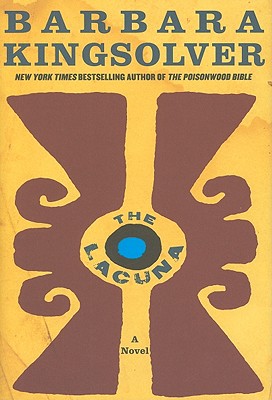
I'm a HUGE fan of Barbara Kingsolver, so you can imagine my excitement when I learned she'll be here in Seattle this month.
She's promoting her new book, Lacuna, which is described as "a page-turner spanning three decades in Washington DC, Mexico, and Russia. An unassuming narrator illuminates the
struggle over communism and global power as he falls into the lives of Frida Kahlo, Lev Trotsky, Herbert Hoover, Richard Nixon, and more"
Friday, October 23, 2009
John Irving at Lake Forest Park Third Place Books, Nov. 3
Seattle Times Books Editor Mary Ann Gwinn interviews John Irving on the Third Place stage, part of Irving's book tour for Last Night in Twisted River. November 3, 7:30 pm-8:30 pm. Lake Forest Park, Third Place Books, 17171 Bothell Way NE, Lake Forest Park, WA 98155
A sad, sad day
Woe is me and all book lovers who have associated Pioneer Square with the Elliott Bay Bookstore. This week The Seattle Times published news that the iconic bookstore is saddled with debt and facing hard decisions. Read the full story here: http://seattletimes.nwsource.com/html/localnews/2010090597_elliottbay19m.html
Thursday, October 08, 2009
Future author "sightings" in Seattle
Michael Chabon looks like he'll put in an appearance: http://www.elliottbaybook.com/events/oct09/chabon.jsp
Friday, October 16 at 5 p.m. at Elliott Bay
And this looks like an excellent program at Third Place Books, Lake Forest Park, on Oct 21: Celebrate National Reading Group Month at Third Place Commons Stage, Lake Forest Park
October 21, 2009 - 7:00 - 9:00pm
Hear 5 experienced authors give their perspectives on author/book club meetings. Come with questions – and enjoy refreshments, book club tips and lists, and literary stuff!
Authors will sign their books, too.
Nancy Pearl - Moderator
Jamie Ford – Hotel on the Corner of Bitter and Sweet
Diane Hammond – Hannah’s Dream
Stephanie Kallos – Sing Them Home
Jim Lynch – Border Songs
Garth Stein – The Art of Racing in the Rain
John Irving anyone?
He'll be at Third Place Books, Lake Forest Park, November 3, 2009 - 7:30 - 8:30pm
His new book is Last Night in Twisted River
Friday, October 16 at 5 p.m. at Elliott Bay
And this looks like an excellent program at Third Place Books, Lake Forest Park, on Oct 21: Celebrate National Reading Group Month at Third Place Commons Stage, Lake Forest Park
October 21, 2009 - 7:00 - 9:00pm
Hear 5 experienced authors give their perspectives on author/book club meetings. Come with questions – and enjoy refreshments, book club tips and lists, and literary stuff!
Authors will sign their books, too.
Nancy Pearl - Moderator
Jamie Ford – Hotel on the Corner of Bitter and Sweet
Diane Hammond – Hannah’s Dream
Stephanie Kallos – Sing Them Home
Jim Lynch – Border Songs
Garth Stein – The Art of Racing in the Rain
John Irving anyone?
He'll be at Third Place Books, Lake Forest Park, November 3, 2009 - 7:30 - 8:30pm
His new book is Last Night in Twisted River
Thursday, September 24, 2009
Proulx coming to Seattle in October!
Annie Proulx - October 7, 2009, 7:30 pm
Benaroya Hall, downtown Seattle at 200 University Street.
The Pulitzer Prize/National Book Award-winning author of "The Shipping News" and "Brokeback Mountain," the story that inspired the movie of the same name. Seattle Arts and Lectures: http://www.lectures.org/index.php
Benaroya Hall, downtown Seattle at 200 University Street.
The Pulitzer Prize/National Book Award-winning author of "The Shipping News" and "Brokeback Mountain," the story that inspired the movie of the same name. Seattle Arts and Lectures: http://www.lectures.org/index.php
September Nights 'o Reading
Just finished Julia Child's My Life in France. Boy is that lady a good storyteller, albeit her grand-nephew takes much credit for putting together the book. I envy her memory, and now I don't feel so bad about keeping so many old letters and photos. They jog the memory cells that have gone to sleep.
Read through the prologue of Water for Elephants before my eyelids couldn't stay open longer last night. Went to Bharti Kirchner's 826 Workshop on Writing the First Page of a Novel, and based on what Kirchner said and other books I've read, Sara Gruen would get an A+.
Speaking of 826 How to Write Like I Do workshops, I learned loads from the queen of books, Ms. Nancy Pearl, this past month on writing book reviews. Check out the soon-to-be-released schedule of workshops for 2010: http://www.826seattle.org/writelikeido/bios.html
Read through the prologue of Water for Elephants before my eyelids couldn't stay open longer last night. Went to Bharti Kirchner's 826 Workshop on Writing the First Page of a Novel, and based on what Kirchner said and other books I've read, Sara Gruen would get an A+.
Speaking of 826 How to Write Like I Do workshops, I learned loads from the queen of books, Ms. Nancy Pearl, this past month on writing book reviews. Check out the soon-to-be-released schedule of workshops for 2010: http://www.826seattle.org/writelikeido/bios.html
Subscribe to:
Posts (Atom)