Thursday, May 17, 2007
The Ghost Map (Steven Johnson)
I have mixed feelings about this read even though the premise of the book is a gripper--cholera is killing thousands of people in densely packed 19th century London--and John Snow tracks the disease to a source: a water pump that the residents are all using to collect water. Only no one believes him. Everyone--including the scientific community--says it has to do with "miasma," this theory that the stink of garbage and sewer infects people with disease. I would have preferred the author to draw the plot forward using John Snow, who is known today as the "Father of Epidemiology," how the events of that period unfolded with cholera itself as the heartless murderer, the femme fetale, and how Snow is stymied by the ignorance of the scientific community, who albeit in good faith sabotaged the health of the population with misdirected intentions. But Johnson doesn't do this. He goes round and round again, losing the plot line in a series of repetitions. And then in the end he keeps going, going into the this picture of how the city has become such a well-oiled, economically viable home to millions of people (where sewer, water, heat can be delivered to more people for less money than in the rural areas), tacking on a couple of chapters at the end of the book that lead the reader to envision the implications involved in the urban density of today. Only, he says the epidemic wouldn't be biological--like cholera or avian flu--necessarily, but technological. In the urban density possible today 25,000 people can be stacked in a building 110 stories high on a 1 acre of space. So, that unlike cholera, which spread comparatively slowly in a wider area, a terrorist attack of a space t his small would have an incredible magnitude and an effect which as we know was nearly instantaneous. And there is no cure either; nothing to stop the imminent deaths. So, when I closed this book I wondered if this book was about the cholera epidemic and how Snow's tracking system set the standard for a field--mapping out illness to locate a source. Or was it how science won out over the scientists. Or was this a story of how the city can grow to numbers unimaginable because of these ingenious systems we've devised to accommodate a mass of people in a relatively small area, numbers that can be easily decimated if the systems that were set up to accommodate the masses become inadvertently the very tools toward destruction. Or maybe it's all of these themes and stories combined, and that was just too much for me in a single book.


Monday, May 07, 2007
The Shadow of the Wind (Carlos Ruiz Zafon)
Barcelona, 1945. I'd picked this one from the three I have out from the library, even it was the longest at 486 pages and probably the most likely I could renew. Maybe it was because I was still mesmerized by WWII (Remember, I'd just finished reading Villa Air-Bel, which is also WWII, but in France). This story takes place in Spain. But the war is in the background, this horror of the government turnaround that led to mysterious deaths and tortures . . . but all of these seem to revolve around this terribly evil person: Fumero.But more likely, I was intrigued by the beginning of the book, the kind of haunting that comes from not knowing and needing to know what happens next. For this book is less about the book--The Shadow of the Wind--that becomes the title, but more about the young boy, Daniel, who slowly uncovers what happened to Julian Carax, the author of the book, The Shadow of the Wind, and what happens to Daniel in the course of uncovering Carax's own story. So, that I no longer care what the book is about that Carax wrote, just about the story unfolding. Perhaps too many coincidences happen along the way . . . but there was something about the tension created by the story of what happens next that kept me turning pages long into the night. Those nights when I go to bed two hours past my bedtime because I found I simply could not put this book down. So, would I recommend this book? Undoubtedly.
Tuesday, April 24, 2007
Villa Air-Bel: World War II, Escape, and a House in Marseille (Rosemary Sullivan)
I just barely finished this 400-page historical wonder before the library reminded me that my renewal is up again. Whew! This was one of those page-turners that I'd be darned to return until I completed the last page. This book recounts a terrifying period of history, focusing on a group of writers, poets, playwrights, artists, and political activists that were literally stuck in Nazi-occupied France, hiding out in Marseille as the Vichy government played puppet to Hitler. The government rounded up Jews, anti-Nazi writers, and any other "elements" that could be considered dangerous. What they feared? Being imprisoned and sent off to the internment camps, with little water, food, or shelter to survive. Little did they know--or anyone really at that time--that those internment camps were extermination centers.The clandestine group included such famous folks as André Breton, Max Ernst, Victor Serge, Marc Chagall, Consuelo de Saint-Exupéry, Remedios Varo, Benjamin Péret, and scores of others. Led by stiff and staid Varian Fry, a US activist turned international diplomat for refugees, and helped by Miriam Davenport, heiress Mary Jayne Gold, Danny Bénédite and his British wife, Theo, they began a program financed privately by the Emergency Rescue Committee to get endangered writers and artists out of France and to the US. These people went to extraordinary, even harrowing lengths to survive and to escape, despite the many threats and obstacles.Sullivan draws their stories so vividly, detailing how the events of WWII brought these people together and radically changed their lives. The book ends with a synopsis of what happens to each of these individuals following the war. What we hope for--the blessing of peace and safety for each of these people after the war--is not what we get. A sad reminder that memory is never left behind.
Sunday, April 01, 2007
Cheating Destiny (James Hirsch)
"America's biggest epidemic," according to James Hirsch, author of Cheating Destiny, is diabetes. Hirsch, who is a Washington-Post journalist, has juvenile diabetes himself, as does his famous brother, Irl Hirsch, who works at the University of Washington as diabetes researcher and clinician. And during the course of writing the book, James Hirsch's three-year old son is diagnosed with diabetes as well. Family genetics play an awfully sure role in developing diabetes.
A little over 50 years ago, there wasn't yet insulin. Now there is plenty of insulin but also still plenty of blame. I live with a man who is diabetic, and am familiar with how much responsibility we place on those with diabetes. If they would only be more careful, monitor their diet more, exercise more or in moderation, then they wouldn't have such highs. They wouldn't have such lows.
Hirsch argues that key figures in the history of diabetic care have created our current attitude, to place the "burden" on the diabetic. To shift some of that responsibility to the health care industry would be more accurate and more helpful. Insulin--which is key to control--has seen sky-rocketing costs. Preventative care not profitable enough. Ironic indeed, since diabetic supplies are hugely profitable to pharmaceutical companies, hospitals, health care clinics, and manufacturers. Bigger bucks are made when the diabetic is ill, has heart disease (as many will), loses a limb or goes on kidney dialysis. The list of maladies caused by living with diabetes is long, the bill statement longer.
Hirsch tells this story as his story, making those of us who know little of the disease cognizant of the daily struggle a person with diabetes lives with, that day-by-day recognition that what is done today prevents what might happen tomorrow, or in other words: how to cheat destiny.
A little over 50 years ago, there wasn't yet insulin. Now there is plenty of insulin but also still plenty of blame. I live with a man who is diabetic, and am familiar with how much responsibility we place on those with diabetes. If they would only be more careful, monitor their diet more, exercise more or in moderation, then they wouldn't have such highs. They wouldn't have such lows.
Hirsch argues that key figures in the history of diabetic care have created our current attitude, to place the "burden" on the diabetic. To shift some of that responsibility to the health care industry would be more accurate and more helpful. Insulin--which is key to control--has seen sky-rocketing costs. Preventative care not profitable enough. Ironic indeed, since diabetic supplies are hugely profitable to pharmaceutical companies, hospitals, health care clinics, and manufacturers. Bigger bucks are made when the diabetic is ill, has heart disease (as many will), loses a limb or goes on kidney dialysis. The list of maladies caused by living with diabetes is long, the bill statement longer.
Hirsch tells this story as his story, making those of us who know little of the disease cognizant of the daily struggle a person with diabetes lives with, that day-by-day recognition that what is done today prevents what might happen tomorrow, or in other words: how to cheat destiny.
Thursday, December 28, 2006
My Year of Meats (Ruth Ozeki)
I just hate it when you've got a good book in your bag that you want to read, but then the holidays creep up and all the fun of being with friends and family soak up free reading, alone-time like a Bounty towel on a wet counter. But that's not really the part I hate--it's when the library send the notice that your book is due in two days, and you know, you just know that this is one of those books that has a line of people out the door waiting to take from your unwilling hands. Plus, Ozeki is speaking next quarter at Cascadia Community College. Such was my hurry to get My Year of Meats read before the library started charging me for my time. I set a quota of a 100 pages a day. But yesterday I blew that quota out of the water and just stayed up until I was finished--there wasn't much sense in putting it down--I was completely hooked until the last line of the last page; it was that good. First of all, the narrator--Jane Takagi--is both vulnerable and do-or-die. And she's got this reality-tv-like assignment--to find interesting characters (who is an "American wife) whose lives will appeal to a Japanese audience on a TV series sponsored by an American meat company: BEEFEX. Her icky big-boss wants to stick to the script--generic, stereotypical white women with well-washed, teethy grin kids and a working husband--but add in beef-cooking recipes that would be unusual. Only Takagi can't seem to memorize the same script. Instead, she finds documentary-type stuff: a family who adopts kids from various countries around the world, the lesbian couple with two kids, the ex-stripper Bunny married wheelchair bound John, had a now 5-year old daughter who's already "developing," and the parents just think she's taking after the buxom mother. Only, that's when everything begins to unravel for both that small community and for Takagi's personal and professional life and the beef about beef starts to resemble a not-so-pleasant truth. My only advice: don't wait for the library's return notice to start the read. You'll want to savor every last bite.
Mountains Beyond Mountains (Tracy Kidder)
Julie recommended this book a while back when we were all still together gabbing about books. Then I went and read Among Schoolchildren, fell in love with Kidder's writing. When I saw this book on sale and heard Paul Farmer was coming to town, I bought not one, but TWO books, and sent one to my brother for his birthday. If anyone inspires one to make a difference, then it's this guy Farmer. His logic makes sense. Drugs alone can't cure a nation besieged by poverty and inequities unfathomed here in the U.S. 'Course it must be mentioned that I'm assuming here that these people can even get the drugs or the right drugs. Lack of transportation, lack of money, lack of time make them largely inaccessible to most people. And even if this person did have a few coins, then what do they choose? A roof over their heads? A meal for the day? Farmer says it's a no-brainer. You heal the sick by making sure they have the basic necessities along with the proper treatment. Yet, the treatment, too, might be part of the problem. . . as often our regimented policies (with the World Health Organization's mandate) make the sick more sick as is the case with drug-resistant tuberculosis. And no one was listening. No one was making it easier for patients . . . they just waited for these patients to die. Poor patients with no political clout. In Peru. In Haiti. In the prisons in Russia. Only, the problem was that these patients were highly infectious, and even if the leaders of these countries didn't give a rat's bahooey about these patients, then they were blind to the reality that TB doesn't operate on a cash-only system; it infects rich and poor alike. But of course, that's the big story. The story that launches the book. But what hooks you is Kidder's beautiful portrayal of the man--Paul Farmer. His idiosyncrasies are as endearing as they are admirable, like a favorite uncle who's always interested in what you've been up to, the guy who's always got a smart comment to say under his breath to make everyone laugh, and the amazing idiot who stands up and shows no fear in telling the truth, even if it offends the President. That's what kept me reading. To see who this guy is, the guy who pulled this system apart and pieced it back together his way. 'Course it wasn't easy to start with, nor is it an easy simple fix, as the fix never seems to be fixed. Perhaps that's why it's called Mountains Beyond Mountains.
Thursday, November 30, 2006
On Writing (Stephen King)
Another book by prolific writer Stephen King . . . thinking blood, gore, creepy crawly, and just plain scary stuff? Not quite. Although it holds surprises to be sure; King's own life is its own roller coaster ride for one, which I never would have imagined, considering his fame and fortune. Yet, reading this book made this reader wide-eyed with fan-struck awe--with that same sense of glee and giddiness felt when a real-live star or published author makes an appearance. As if in that moment, there is a person, a real person. Maybe that's why the advice to the burgeoning writer to write the same clear, concise, "adverb-free" prose comes like a gift, a pearl of sorts. Or maybe it's because the book is a story of the man as much as it is a the story of how to write. And one knows a book is good, if it inspires.
Tuesday, November 14, 2006
Enrique's Journey (Sonia Nazario)
I've got Sonia Nazario's Enrique's Journey in my bag today, destined to go back to the library, finally after a second checkout. And that's not because I had trouble getting through it, it's because I couldn't bear to return it without finishing this very sad, sad tale of a boy's journey from Guatemala on the trains to find his mother who'd gone north to the U.S. work (and feed her son and daughter) when they were very, very young. What's so sad about this story is that it is not unique. Thousands upon thousands of mothers in Central America leave their children with families to find work and send money home. If they don't, then they watch their children suffer, starve, and never get an education that could get them out of the poverty they were born into. Yet, Enrique's journey, too, is not unique. Many young children attempt to go north to find their mother, and because they do, many are beaten up, lose limbs, raped, or are murdered. Nazario spins the tale as if she is with Enrique the whole time, on every attempt (he tried 6 times and was deported back to Guatemala, only reaching the U.S. on his seventh attempt), and that's because Nazario, a Los Angeles Times reporter has done some excellent investigative reporting. She writes that it took her five years to complete the book, which is based on a series that appeared first in the newspaper. What she also does so well is convince the reader that this is not just Central America's problem. It is ours, too, in the U.S. And even as we ratchet up more officers and fences along the Mexican border, more and more illegal immigrants like Enrique are still trying, despite the risks. Because the alternative is also suffering, just of another kind.
Thursday, November 09, 2006
A Death in Belmont (Sebastian Junger)
I'm also on a non-fiction diet. This one was gripping . . . in the way that only books about serial murders can be. As in, how long is it going to take before they catch the guy. What makes this "hit home" is that the author--Sebastian Junger, who is also a journalist--had met the man who was finally arrested for the murders in Boston. In fact, the man had helped build an art studio for his mother, and so he was often on their property and in their house. And when the neighbor woman was killed, and if this same man did it, he would have killed the woman during his lunch hour. C-r-e-e-p-y. But that's not all. A black man (who had been hired that same day to help clean the house and was supposedly the last person to see the woman alive) was accused (and convicted) of the murder of that neighbor--a murder that seemed very much like the murders that the serial murderer committed and admitted to. So, how much the racial issues of the time tainted the verdict is debated by Junger in this book. As is the history of Boston and of the death of President Kennedy--who is murdered on the eve of the conviction. Junger is also the author of "The Perfect Storm." So, if anyone has a knack for suspense, he certainly leads the pack in "terrific."
Thursday, August 11, 2005
Nancy Pearl and Book Lust
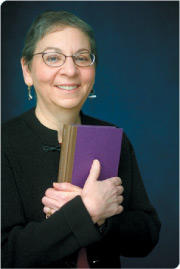
If you haven't heard about this book-lusty lady--then you are missing out. Nancy Pearl is a retired librarian from Seattle who gets big and small kids excited about books. Yes, books! In fact, she's become such an icon around the Pacific Northwest that Archie McPhee's has a miniature action figure of Nancy Pearl that holds her finger to her lips to say "Shhhhhh." Also, just released is a deluxe edition of the figure, with stack of books and book cart. No suprise there. She has a talk show on KUOW radio and has written two books: Book Lust and More Book Lust, books that detail her favorite picks of what else? books. My favorite Pearl 'o wisdom? Love books, yes. But life is too short to waste your time reading a book you don't enjoy. Minus your age from 100, and that's as far as you need to read in the book to realize whether the book is worth finishing or not. If you reach that page "milestone" and you're still not " into it," then you know what? Return that book to your library or donate it to the Goodwill. The stacks are too chock full of other good books to fall in love with.
Subscribe to:
Posts (Atom)